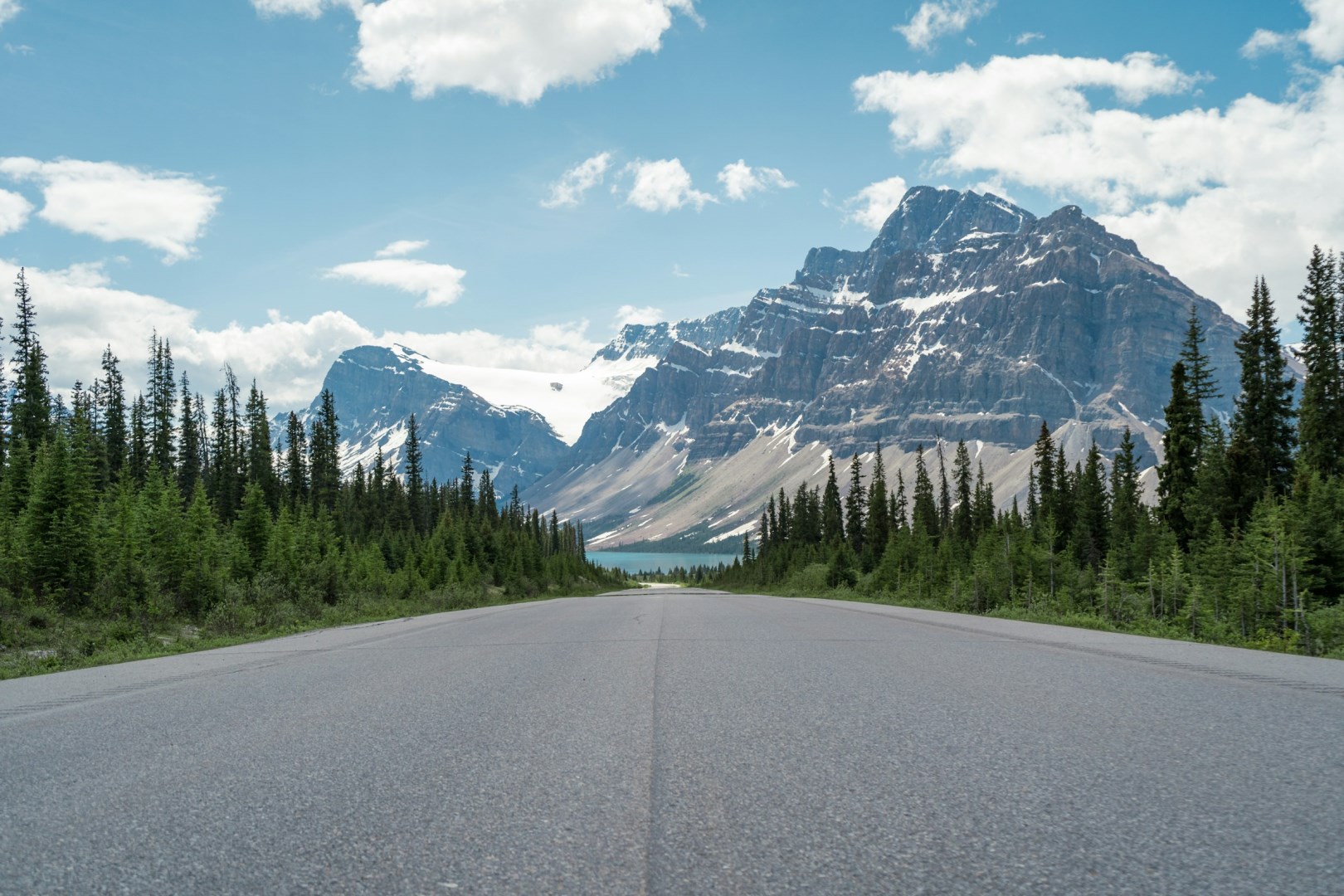
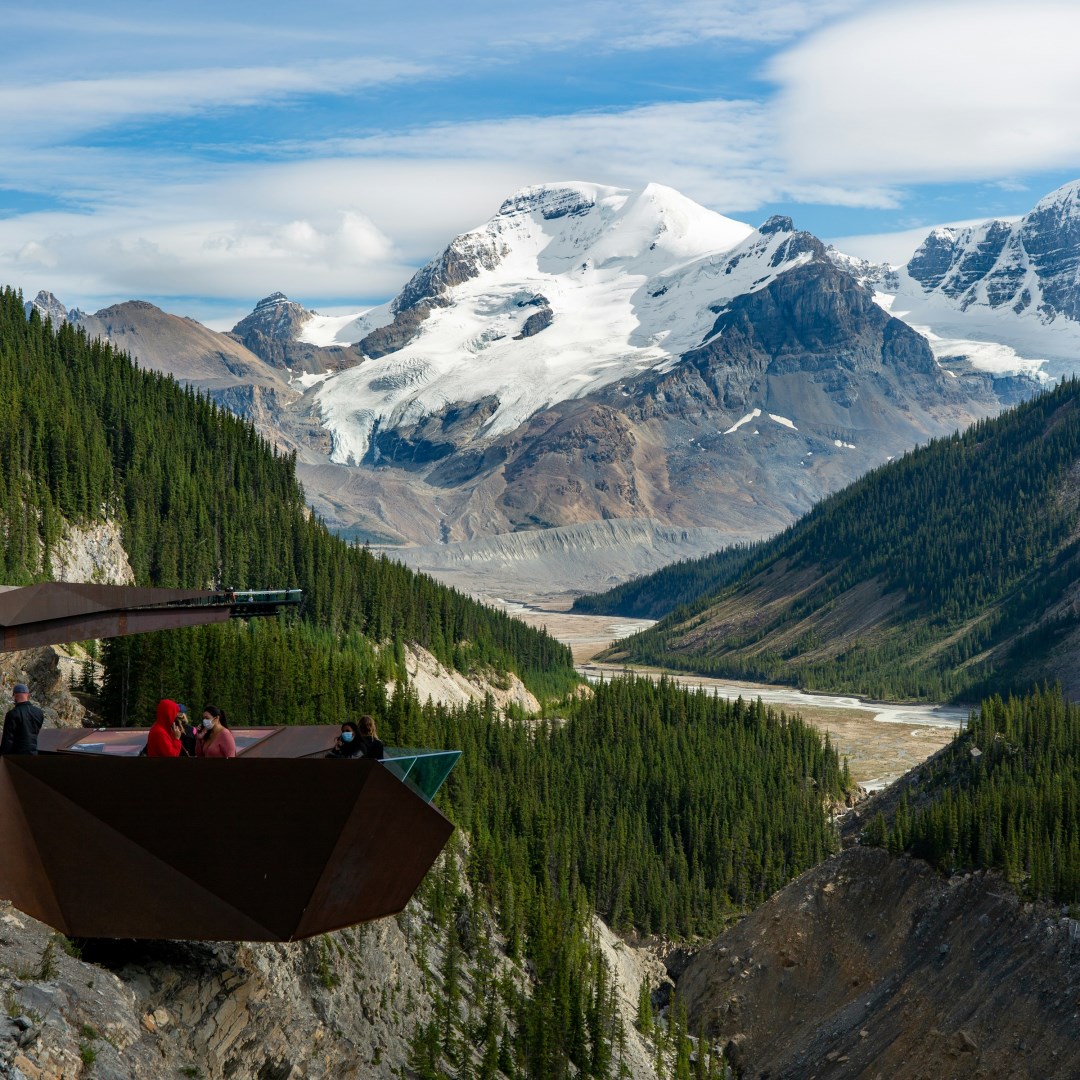
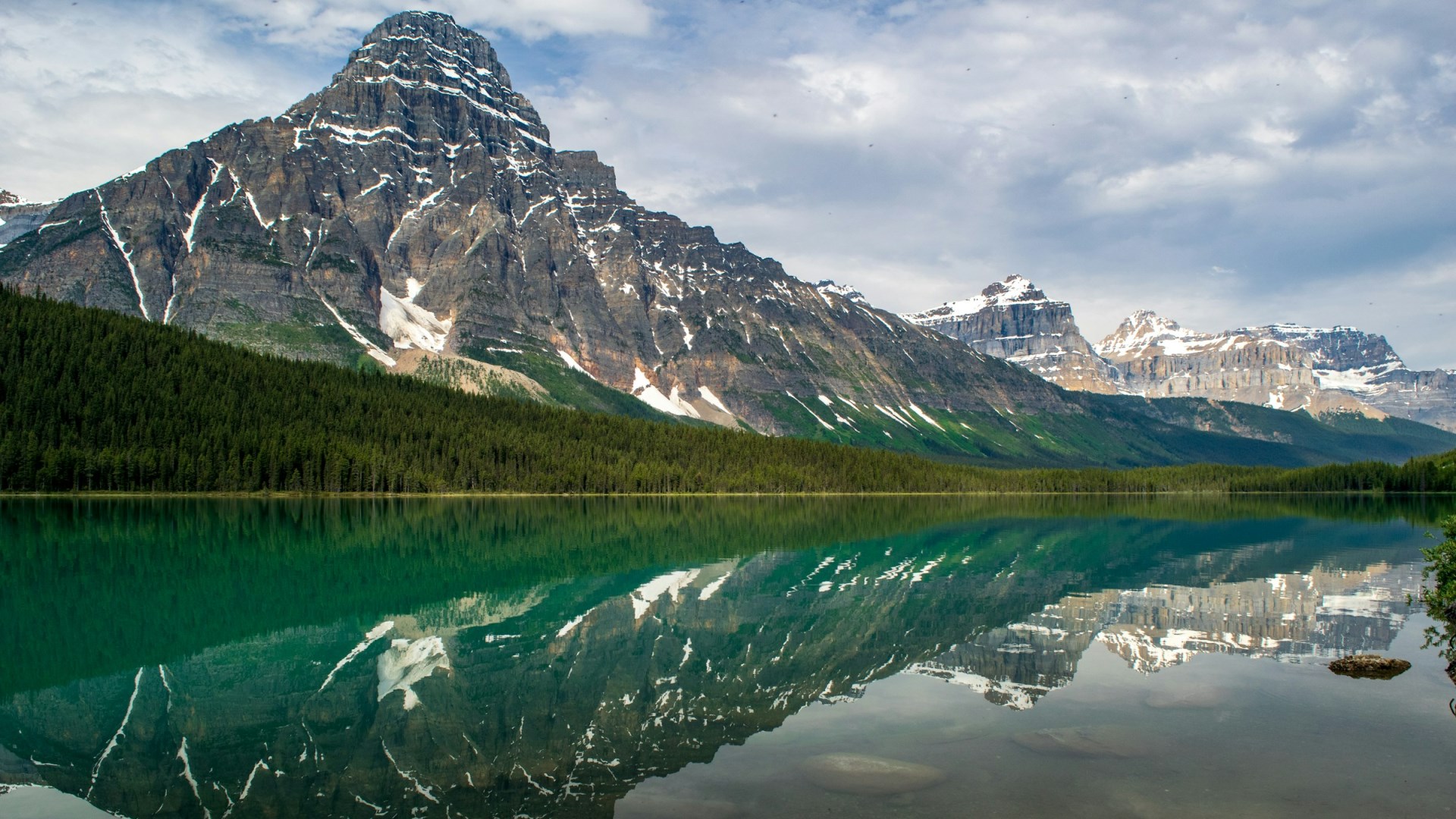
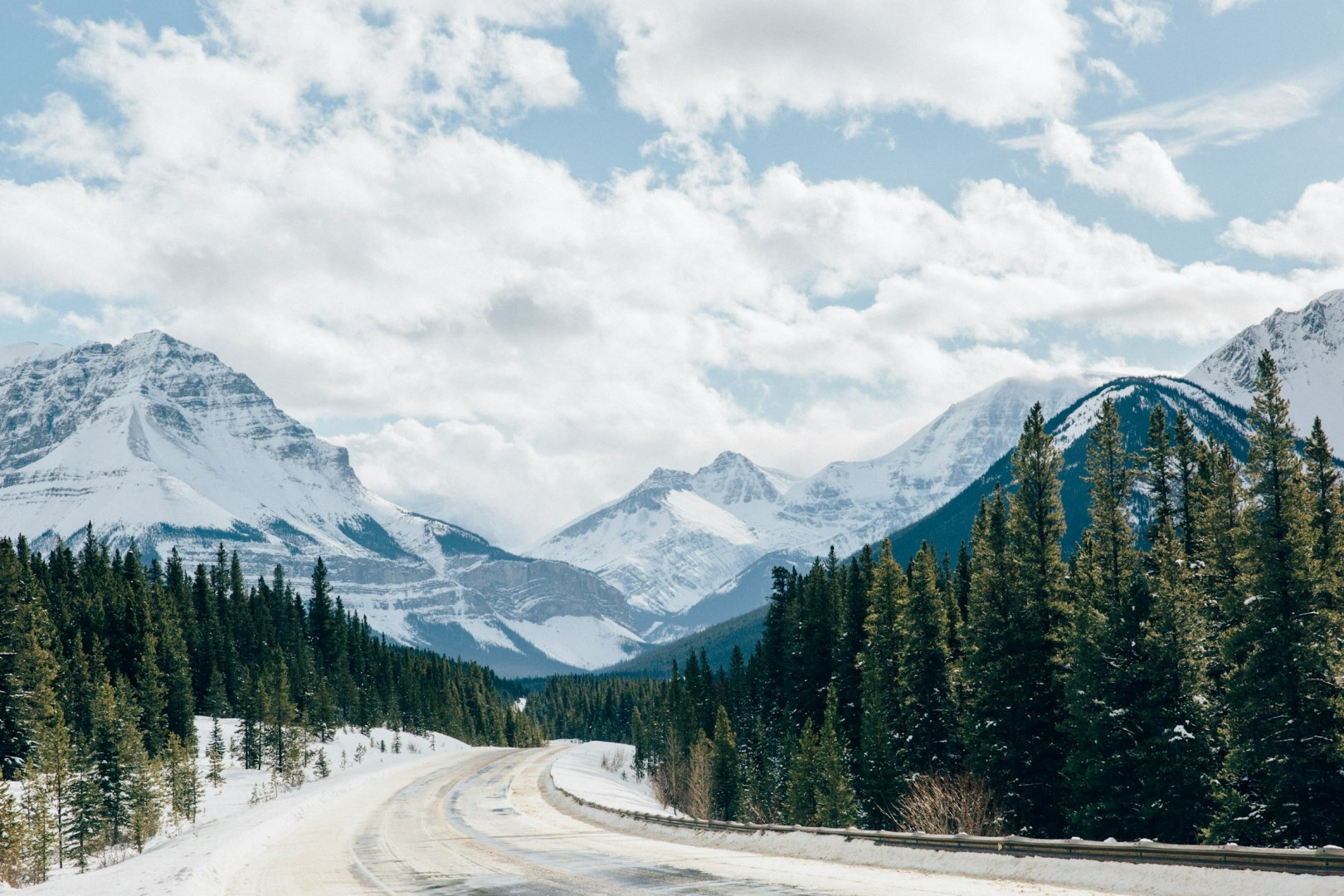
The Icefields Parkway is a scenic mountain highway connecting Lake Louise and Jasper through the Canadian Rockies of Alberta. The route follows valleys between rugged peaks, passing glaciers, turquoise lakes, alpine meadows, forests, and major river headwaters. It crosses the Continental Divide and runs through both Banff and Jasper national parks, forming part of a UNESCO World Heritage landscape. The highway is closely associated with the Columbia Icefield, where the Athabasca Glacier descends toward the road. Its route links several major mountain environments within a relatively concentrated stretch of the Rockies.
The Icefields Parkway crosses the traditional territories of several Indigenous peoples, including the Stoney Nakoda, Îyâxe Nakoda, Tsuut’ina, Blackfoot, and Métis communities. Indigenous peoples have long traveled through the valleys and mountain passes along this corridor for hunting, gathering, trade, and cultural purposes. The highway itself reflects a later period of exploration, road building, and tourism in the Canadian Rockies. Today, Parks Canada manages the national park sections of the route, with interpretation and visitor facilities providing information about Indigenous connections, wildlife, geology, glaciers, and the surrounding protected landscapes.
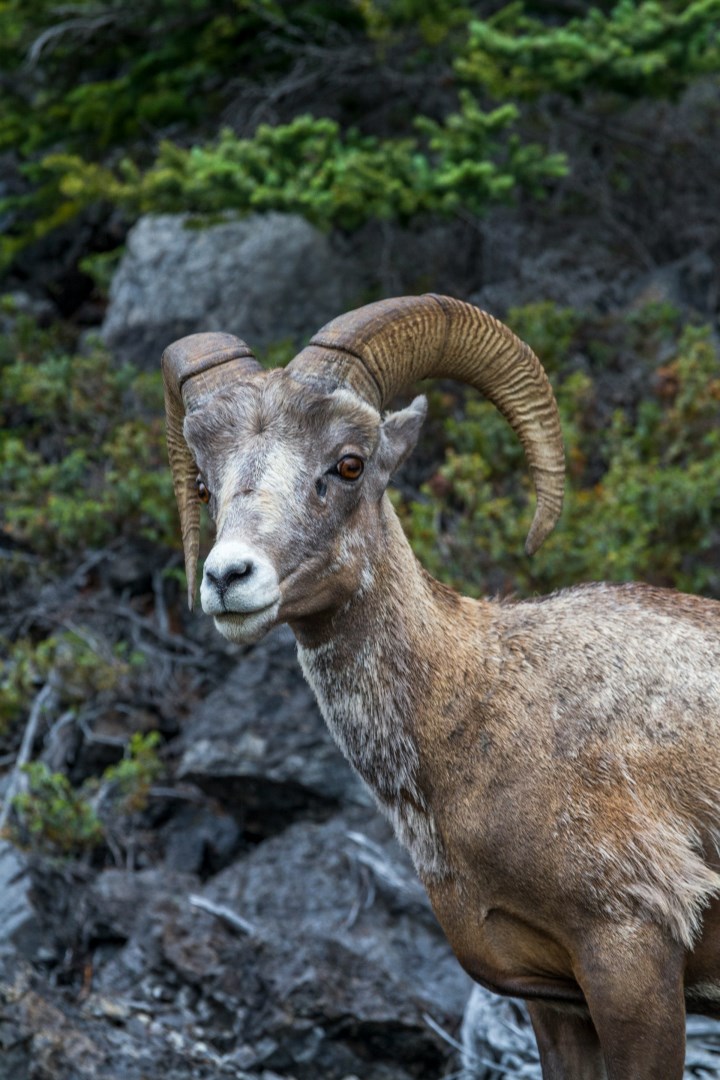
Major landmarks along the route include Lake Louise, Bow Lake, Peyto Lake, the Saskatchewan River Crossing, Sunwapta Pass, Athabasca Glacier, and the Columbia Icefield. Numerous viewpoints and short trails provide access to mountain valleys, waterfalls, lakes, and glaciers, while longer hiking routes lead into surrounding wilderness. The road also crosses important wildlife habitat, and travelers may encounter elk, bighorn sheep, mountain goats, black bears, grizzly bears, and other species. Waterways beside the parkway form the headwaters of rivers flowing toward the Pacific, Arctic, and Hudson Bay drainage systems.
Food along the Icefields Parkway is shaped mainly by the needs of travelers rather than by a distinct local cuisine. Visitor centers, lodges, and restaurants in places such as Lake Louise, Saskatchewan River Crossing, and the Columbia Icefield provide meals, snacks, and supplies for journeys through the mountains. A distinctive feature of the route is its role as a continental watershed: water from nearby glaciers and snowfields eventually flows into different major drainage basins. The parkway also provides unusually direct access to glacial landscapes, allowing visitors to see active glaciers, glacial lakes, and mountain valleys from a single continuous road corridor.


✆: 470-253-8209
✉:
AM Travel Agency
3245 Peachtree Parkway
SUITE D102
SUWANEE, GA 30024
CLIA ID 00027468 | IATA ID 11545483 | ARC ID 11554583 | ST- 42058 UBI - 60404540806, CA - 2141752-70