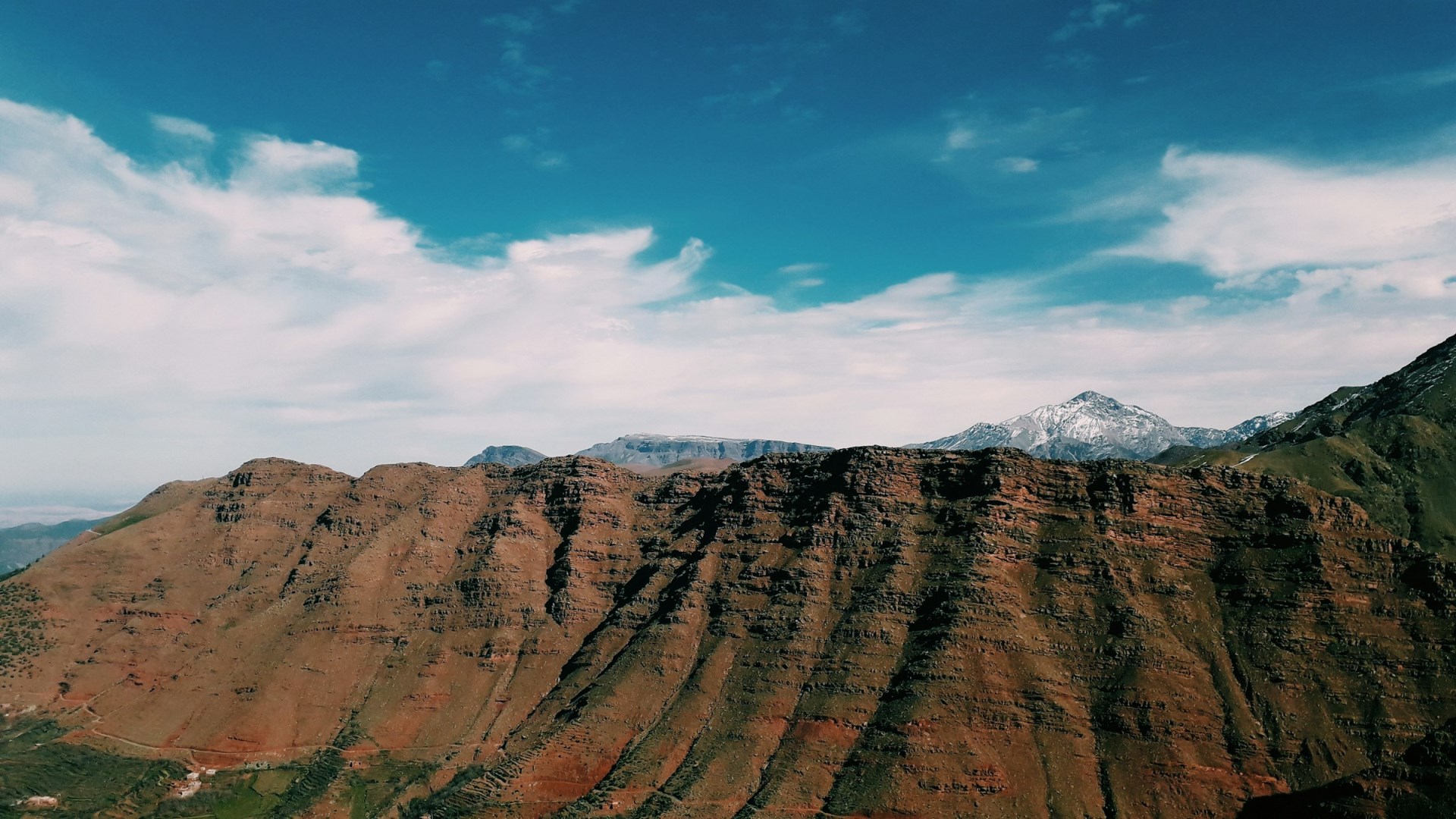

Oukaïmeden is a high mountain village and ski area in Morocco’s High Atlas, south of Marrakesh. Set at about 2,600 metres above sea level, it occupies a broad upland basin surrounded by rocky peaks and seasonal pastures. Snow commonly covers the higher slopes in winter, while warmer months reveal grassland, exposed rock and small streams fed by mountain runoff. The village is one of Morocco’s best-known winter sports areas, with ski lifts and runs on the slopes above the settlement. Its high elevation also provides wide views across the surrounding Atlas ranges.
Oukaïmeden lies within an Amazigh cultural landscape where pastoralism has long shaped settlement and land use. Families from surrounding valleys traditionally bring livestock to high summer pastures, taking advantage of grazing areas that become accessible after winter snow retreats. Stone and earth buildings reflect materials readily available in the mountains, while Tamazight remains part of local linguistic life. The area is also notable for prehistoric rock carvings found around the plateau. These engravings depict animals, weapons and human figures, providing archaeological evidence of people using and moving through the High Atlas long before the development of the modern mountain settlement.
The Oukaïmeden plateau is surrounded by peaks rising above 3,000 metres, creating opportunities for hiking and mountain travel as well as winter skiing. Trails connect the settlement with high passes, grazing areas and villages in neighbouring valleys. The plateau also has an artificial lake that collects mountain water and adds an important wetland habitat to the otherwise rocky landscape. BirdLife International recognizes Oukaïmeden as an Important Bird and Biodiversity Area, with species associated with high-altitude North African environments. The region’s combination of cliffs, alpine grassland, streams and seasonal snow distinguishes it from the dry plains around Marrakesh.
Food in Oukaïmeden follows the practical cooking traditions of Morocco’s mountain communities. Tagines prepared with meat and vegetables, couscous, bread and hot mint tea are common, especially during cold weather. Lamb and goat reflect the pastoral economy of the High Atlas, while walnuts, apples and other crops are grown at lower elevations in nearby valleys. Small cafés and restaurants serve visitors during busy periods, particularly when snow conditions draw skiers from Marrakesh.


✆: 470-253-8209
✉:
AM Travel Agency
3245 Peachtree Parkway
SUITE D102
SUWANEE, GA 30024
CLIA ID 00027468 | IATA ID 11545483 | ARC ID 11554583 | ST- 42058 UBI - 60404540806, CA - 2141752-70