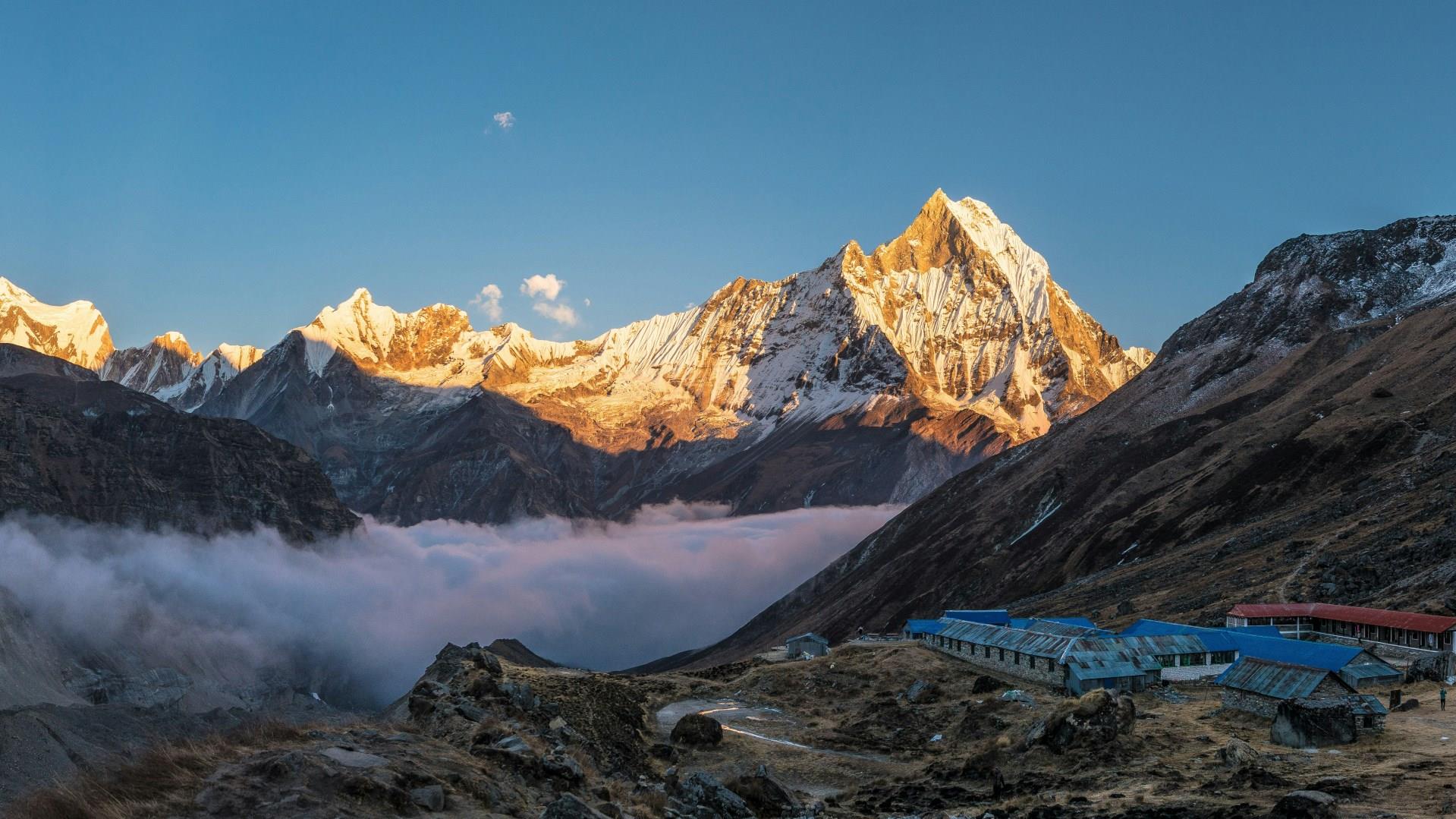
The Annapurna region of central Nepal is defined by both cultural depth and extreme topography. Home to a wide range of ethnic communities, including Gurung, Thakali, and Manangi peoples, the area has long been shaped by trans-Himalayan trade routes and mountain agriculture. Villages, monasteries, and prayer flags reflect a lived spiritual landscape rather than one set aside for display.
The terrain shifts dramatically over short distances. Subtropical valleys rise into alpine forests, glacial rivers cut through deep gorges, and the Annapurna massif dominates the skyline with some of the world’s highest peaks. Trails such as the Annapurna Circuit and Annapurna Base Camp route pass through this variety, revealing how closely human settlement follows altitude, climate, and water.
The atmosphere is expansive and contemplative. Life moves at the pace of walking, weather, and daylight, and the scale of the mountains encourages humility and attention.

✆: 470-253-8209
✉:
AM Travel Agency
3245 Peachtree Parkway
SUITE D102
SUWANEE, GA 30024
CLIA ID 00027468 | IATA ID 11545483 | ARC ID 11554583 | ST- 42058 UBI - 60404540806, CA - 2141752-70